- How Sympathy Struck — A Study of American Public Opinion on Eugenics Surrounding WWII
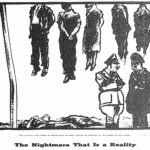
Eugenics was once considered a popular, progressive scientific movement, butfollowing WWII and the atrocities performed by Nazi Germany, the term “eugenics” has come to connote the worst of humanity’s known crimes. The history of eugenics presents this downfall as simple fact: when news of Nazi Germany broke out, the world reacted unanimously to denounce the eugenics ideology. But it is not the nature of public opinion to turn backwards over itself when challenged, and especially not overnight. This paper aims to examine both how and why American public and scientific opinions on eugenics changed immediately following WWII. I will specifically focus on primary sources that report on or react to the news of Nazi eugenics by following the information as it was released via the New York Times, a leading American newspaper in the period of Nazi Germany. Project by Shannon Shams.
- The Promise of a Cure: An Analysis of the Social Construction of Gene Therapy for Sickle Cell Disease
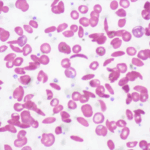
This Capstone project explores the social construction of science through the contradictory narrative of the SCD gene therapy CASGEVY. This contradictory narrative of CASGEVY embodies the uncertain, variable, and changing nature of the social construction of science, and highlights the role of racial politics in the field of SCD research. This project utilizes a three-pronged approach to demonstrate this social construction, and explore themes of contradiction in science. The project explores the origins of SCD gene therapy, the process of truth validation, and the environment of SCD gene therapy. Project by Shivani Mohapatra.
- Media, Mistrust, and the Genome: How Media Shapes Public Perceptions of Genetic Data Collection
Media narratives shape public trust and participation in genetics research through framing, misinformation, and portrayals of ethical risk, often affecting trust in scientific institutions and willingness to share genetic data. Nevertheless, public engagement is essential for building diverse and scientifically reliable genetic datasets. Drawing on historical controversies such as the Tuskegee Syphilis Study and the Havasupai Tribe case, the paper highlights how ethical failures and sensationalized reporting can deepen public skepticism and reduce participation among marginalized communities. Responsible media reporting, transparent data protections, and adaptive consent models are critical to rebuilding trust and ensuring the future success of ethical genetics research. Project by Cassidy Lo.
- Genes on Trial: MAOA-L, The Legal Interpretation of Behavioral Genetics
This paper examines how behavioral genetic evidence has been used in criminal cases to shape ideas of violence, intent, and legal responsibility. Focusing on the case studies State v. Waldroup (2011) and State v. Yepez (2015), it analyzes how courts reached different conclusions regarding the admissibility and influence of MAOA-L gene evidence. The paper argues that the legal significance of behavioral genetics depends largely on how judges and juries interpret scientific legitimacy rather than on the gene itself. It also explores how genetic explanations of violence risk reinforcing biological determinist thinking while drawing attention away from structural factors such as abuse, trauma, and poverty. Ultimately, the project demonstrates the challenges of applying population-level behavioral genetics research to individual criminal defendants within the justice system. Project by Violet Webber.
- Fear, Identity, Obsession – How Contemporary Media Reflects and Shapes Genetic “Common Sense”
This project explores how modern media, in the form of advertising, film and TV, social media, politics, and even video games, reflect and shape the new age “common sense” surrounding genetics. Through our research, we identified three main themes apparent in this genetic conversation – fear(mongering), identity-building, and consumer obsession. All three of these threads come together to form a complex, chaotic, and rich dialogue. Throughout this zine, we justify our interest in pop culture as a mechanism for creating “common sense” and exerting influence, drawing readers’ particular attention to the resurgence of genetic language in the broader American political discourse to create an understanding of the “bigger picture” of our project. Project by Vanessa Richards and Greta Gilmor.
- Evolution of Perspectives on Intellectual Disability
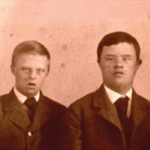
Our project, which takes form in a zine, seeks to answer the question: “How did perspectives on intellectually disabled people in America change between 1840-1930?”. Central to our project is a timeline tracking the legal, scientific, public health, and education developments towards people with intellectual disabilities. This timeline stands next to primary sources including pamphlets, photographs, letters, books, and research papers. Through displaying these historical pieces we hope readers gain an understanding of medical, legal, social, and scientific perspectives throughout our chosen period of history. This main portion of our project is complimented by “letters from the editors” and “letters to the editor” which bring in world history and disabilities studies perspectives. Project by Katja Brion and Lucy Dewart.


 Eugenics was once considered a popular, progressive scientific movement, butfollowing WWII and the atrocities performed by Nazi Germany, the term “eugenics” has come to connote the worst of humanity’s known crimes. The history of eugenics presents this downfall as simple fact: when news of Nazi Germany broke out, the world reacted unanimously to denounce the eugenics ideology. But it is not the nature of public opinion to turn backwards over itself when challenged, and especially not overnight. This paper aims to examine both how and why American public and scientific opinions on eugenics changed immediately following WWII. I will specifically focus on primary sources that report on or react to the news of Nazi eugenics by following the information as it was released via the New York Times, a leading American newspaper in the period of Nazi Germany. Project by Shannon Shams.
 This Capstone project explores the social construction of science through the contradictory narrative of the SCD gene therapy CASGEVY. This contradictory narrative of CASGEVY embodies the uncertain, variable, and changing nature of the social construction of science, and highlights the role of racial politics in the field of SCD research. This project utilizes a three-pronged approach to demonstrate this social construction, and explore themes of contradiction in science. The project explores the origins of SCD gene therapy, the process of truth validation, and the environment of SCD gene therapy. Project by Shivani Mohapatra.
 Media narratives shape public trust and participation in genetics research through framing, misinformation, and portrayals of ethical risk, often affecting trust in scientific institutions and willingness to share genetic data. Nevertheless, public engagement is essential for building diverse and scientifically reliable genetic datasets. Drawing on historical controversies such as the Tuskegee Syphilis Study and the Havasupai Tribe case, the paper highlights how ethical failures and sensationalized reporting can deepen public skepticism and reduce participation among marginalized communities. Responsible media reporting, transparent data protections, and adaptive consent models are critical to rebuilding trust and ensuring the future success of ethical genetics research. Project by Cassidy Lo.
 This paper examines how behavioral genetic evidence has been used in criminal cases to shape ideas of violence, intent, and legal responsibility. Focusing on the case studies State v. Waldroup (2011) and State v. Yepez (2015), it analyzes how courts reached different conclusions regarding the admissibility and influence of MAOA-L gene evidence. The paper argues that the legal significance of behavioral genetics depends largely on how judges and juries interpret scientific legitimacy rather than on the gene itself. It also explores how genetic explanations of violence risk reinforcing biological determinist thinking while drawing attention away from structural factors such as abuse, trauma, and poverty. Ultimately, the project demonstrates the challenges of applying population-level behavioral genetics research to individual criminal defendants within the justice system. Project by Violet Webber.
 This project explores how modern media, in the form of advertising, film and TV, social media, politics, and even video games, reflect and shape the new age “common sense” surrounding genetics. Through our research, we identified three main themes apparent in this genetic conversation – fear(mongering), identity-building, and consumer obsession. All three of these threads come together to form a complex, chaotic, and rich dialogue. Throughout this zine, we justify our interest in pop culture as a mechanism for creating “common sense” and exerting influence, drawing readers’ particular attention to the resurgence of genetic language in the broader American political discourse to create an understanding of the “bigger picture” of our project. Project by Vanessa Richards and Greta Gilmor.
 Our project, which takes form in a zine, seeks to answer the question: “How did perspectives on intellectually disabled people in America change between 1840-1930?”. Central to our project is a timeline tracking the legal, scientific, public health, and education developments towards people with intellectual disabilities. This timeline stands next to primary sources including pamphlets, photographs, letters, books, and research papers. Through displaying these historical pieces we hope readers gain an understanding of medical, legal, social, and scientific perspectives throughout our chosen period of history. This main portion of our project is complimented by “letters from the editors” and “letters to the editor” which bring in world history and disabilities studies perspectives. Project by Katja Brion and Lucy Dewart.