
How Sympathy Struck — A Study of American Public Opinion on Eugenics Surrounding WWII
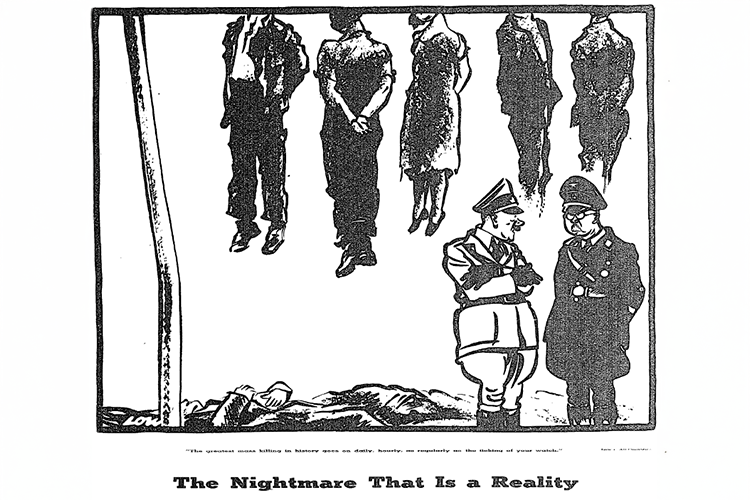
Eugenics was once considered a popular, progressive scientific movement, butfollowing WWII and the atrocities performed by Nazi Germany, the term “eugenics” has come to connote the worst of humanity’s known crimes (i.e. forced sterilization, mass euthanasia, torturous medical experiments, etc.). The history of eugenics presents this downfall as simple fact: when news of Nazi Germany broke out, the world reacted unanimously to denounce the eugenics ideology. But it is not the nature of public opinion to turn backwards over itself when challenged, and especially not overnight. This paper aims to examine both how and why American public and scientific opinions on eugenics changed immediately following WWII. I will specifically focus on primary sources that report on or react to the news of Nazi eugenics by following the information as it was released via the New York Times, a leading American newspaper in the period of Nazi Germany. Then, I will evaluate the articles found in the context of human sympathy and morality to determine how eugenics was vilified soon thereafter.
Project from the Winter 2026 191S course (Society & Genetics Minor) mentored by Prof. Soraya de Chadaverian.
About the Author

Shannon Shams is a 4th year student at UCLA.