
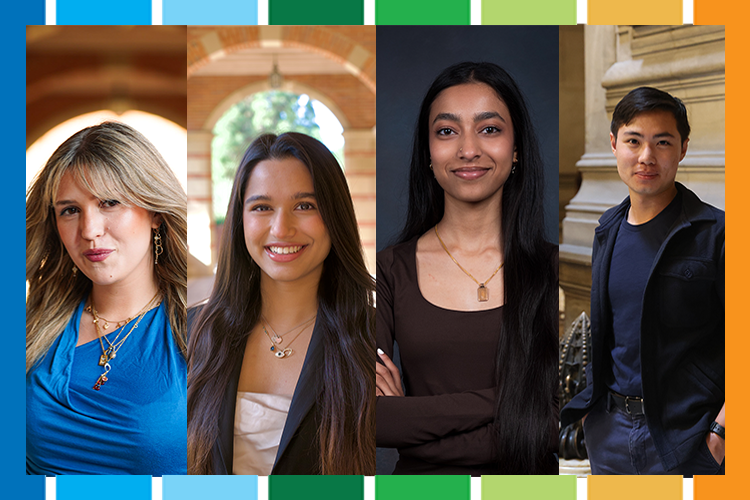

Vincent Duc Cao, Shreya Kalyanaraman, Saanvi Rai and Alexandra Maria Tabacu (HBS ’26)
We would like to spotlight Vincent Duc Cao, Shreya Kalyanaraman, Saanvi Rai and Alexandra Maria Tabacu (HBS ’26) for receiving the Dean’s Prize for Excellence in Research: Life Sciences, Physical Sciences, and Engineering Award.
Congratulations all for your success!
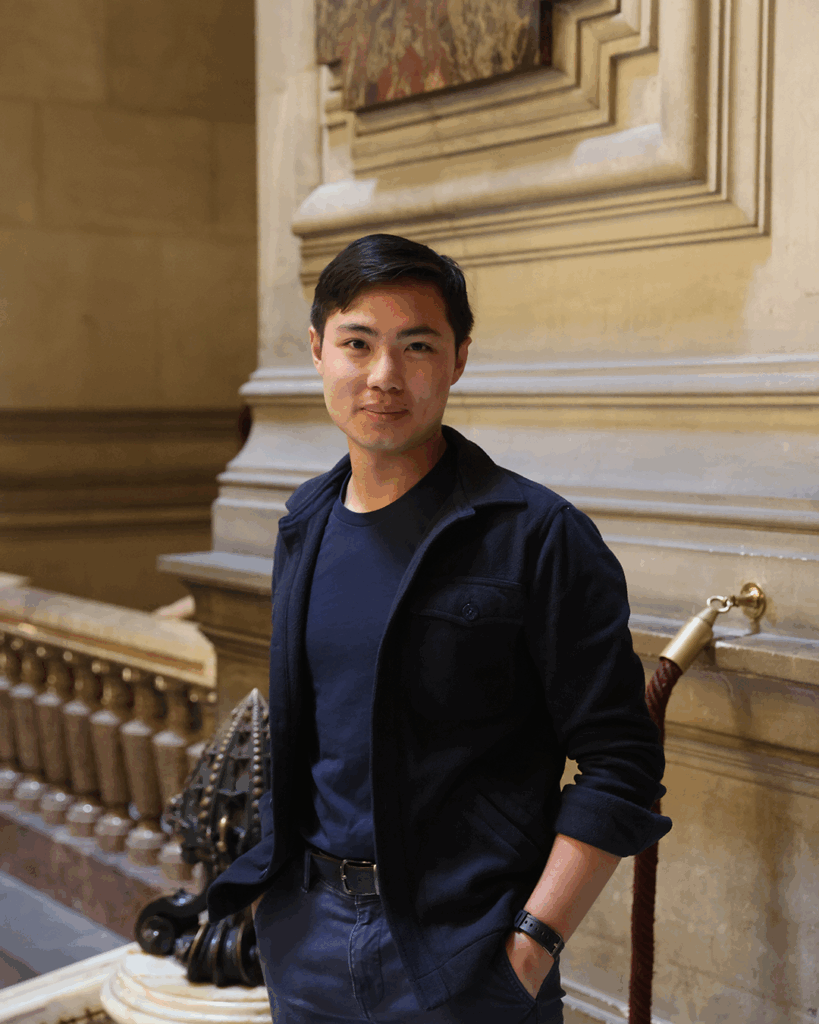
Project Showcase
Evaluating Portable Bioimpedance Analysis as an Alternative Tool for Hemodialysis Optimization
Bioimpedance analysis (BIA) is a non-invasive method that uses electrical currents to analyze body composition and evaluate fluid status. While BIA is widely used in obesity clinics and fitness programs, it remains underutilized for dialysis patients. This project evaluated whether portable BIA could serve as a time-efficient alternative for dialysis optimization. It was completed at the West Los Angeles Veterans Affairs Medical Center, which serves two outpatient dialysis units: one ambulatory and a second higher-acuity subacute unit with more medically complex, often bedbound patients.
About the Author
Vincent is a graduating UCLA Human Biology and Society student-athlete whose work centers around clinical research, leadership, and service. Outside of academia, he helps design and conduct kidney research at the West Los Angeles Veterans Affairs Medical Center while supporting substance use cessation research with the UCSF HEARTY Lab. He has also served as president of UCLA Fencing and president of Musical Medicine at UCLA. On the weekends, you can often find him fencing at a tournament, playing piano for a senior home, or translating for underserved patients in Orange County. This year, he received the Chancellor’s Service Award.
Mentored by Dr. Jeffrey Kraut
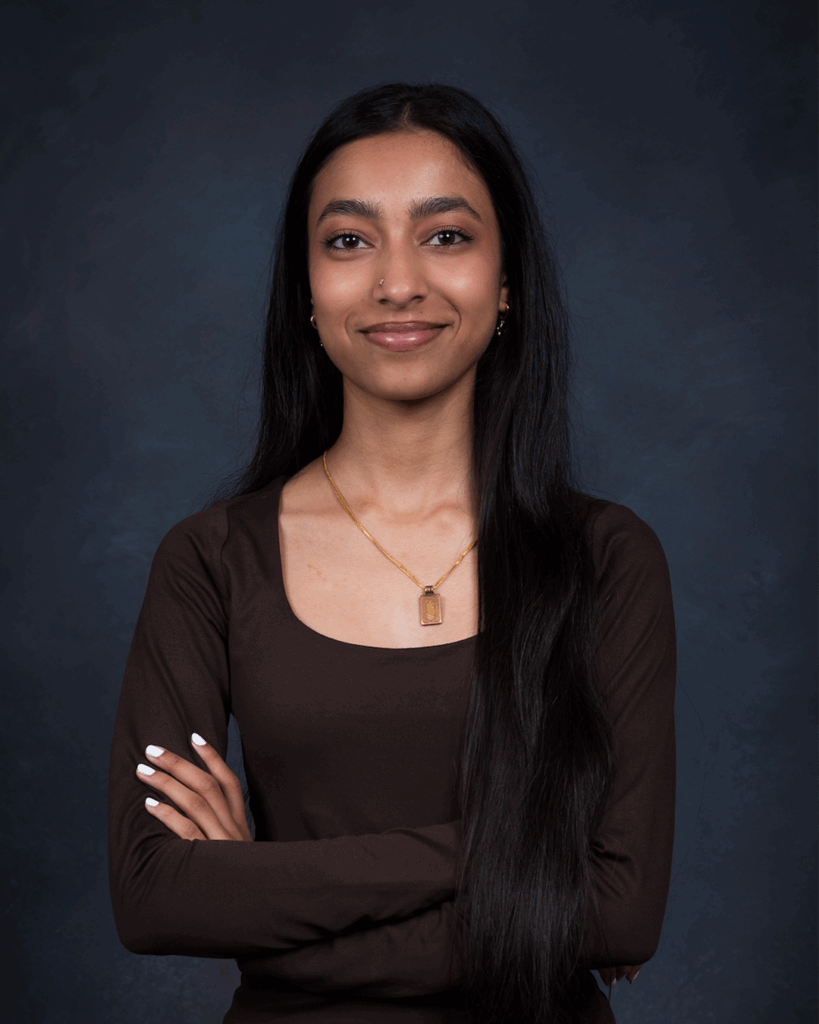
Project Showcase
Coordinated Multi-Organ Inflammatory Signaling in Experimental Pulmonary Hypertension
My project focused on coordinated multi-organ inflammatory signaling in experimental pulmonary hypertension (PH). PH is traditionally characterized as a cardiopulmonary disease affecting only the lungs and heart, but we have hypothesized that the disease also drives inflammation in other organs, including the liver, kidneys, and spinal cord. Our findings showed increased and coordinated inflammatory upregulation across all five organs, suggesting that PH may have systemic effects beyond the cardiopulmonary system. Additionally, we identified two candidate genes that may serve as future targets for gene therapy. Overall, these findings contribute to a broader understanding of PH biology and its impact on the body.
About the Author
Shreya Kalyanaraman is a third-year transfer student at UCLA, majoring in Human Biology and Society on the pre-medical track. She conducts undergraduate research in the Umar Lab, where she studies pulmonary hypertension (PH) and its systemic effects on the body. She is passionate about integrating scientific research with patient care and hopes to pursue a career as a physician.
Mentored by Dr. Soban Umar
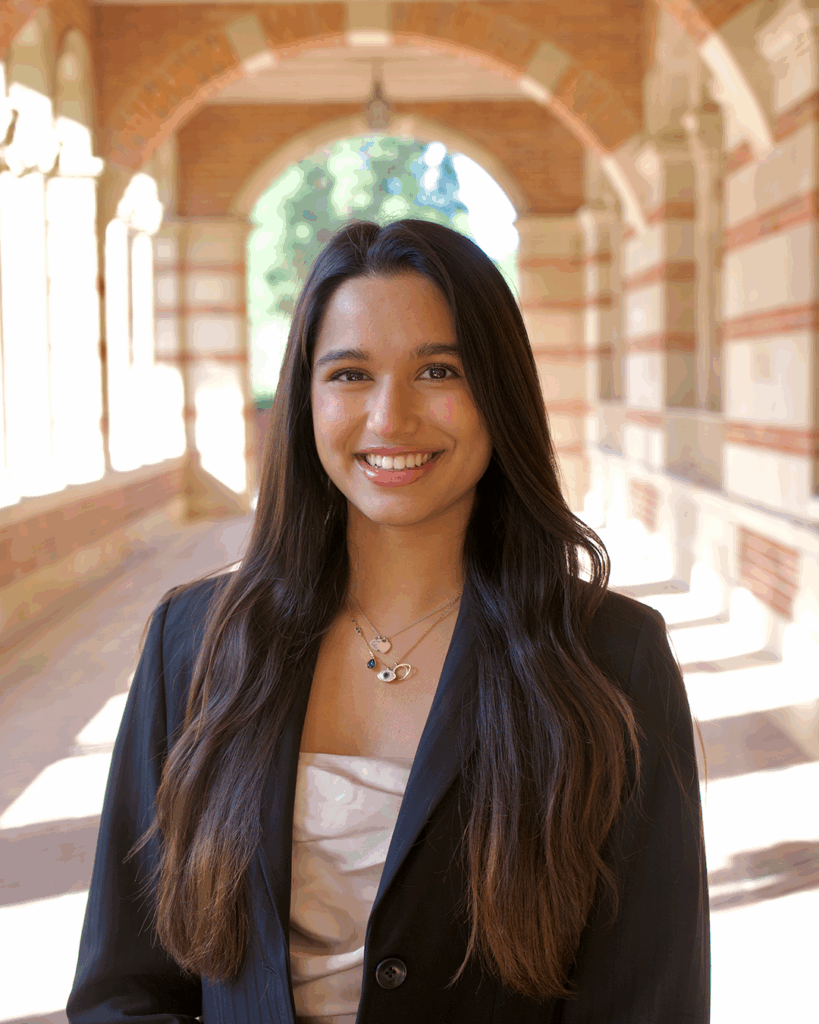
Project Showcase
Evaluating the specificity of PARP7 dependency in NSCLC by differential responses to multiple inhibitors of PARP family members
Lung cancer remains the leading cause of cancer-related deaths worldwide, with non-small cell lung cancer (NSCLC) being the main histological subtype of lung cancer. PARP7 is emerging as a promising drug target to treat NSCLC. Our previous data mining in the DepMap database suggests that 40% of NSCLC cell lines depend on PARP7 for survival. To assess whether this dependency is specific to PARP7, we compared the sensitivity of PARP7 inhibition to that of PARP family members, PARP1 and PARP2, by in vitro drug dose response studies. Our findings reveal that NSCLC cell lines that are most sensitive to PARP7 inhibition are largely resistant to PARP1 or PARP2 inhibition, further supporting PARP7 as a specific therapeutic target in a subset of NSCLC.
About the Author
Saanvi Rai is a Human Biology and Society major from the Bay Area. On campus, she is involved in community service clubs and public health organizations. She conducts non-small cell lung cancer research in the Dubinett Lab, which is where she worked on her project, PARP7 Inhibition as a Therapy for Non-small Cell Lung Cancer. Interested in community health and the ways policy shapes access to care, Saanvi plans to pursue medical school. She is passionate about understanding how social determinants of health influence patient outcomes and using that lens to improve care for diverse communities.
Mentored by Dr. Steven M. Dubinett, MD

Project Showcase
Role of oxytocin in mediating early-life social cohesion in Astatotilapia burtoni
Alexandra’s project investigates the role of isotocin, the teleost homolog of oxytocin, in regulating early-life social behavior in juvenile A. burtoni cichlid fish. Using CRISPR-based genetic models, isotocin production was disrupted to examine its causal role in shaping affiliative behaviors, like group coordination. Using behavioral assays and automated tracking, social cohesion was quantified, revealing that reduced oxytocin signaling leads to diminished social cohesion and weaker group organization during development. By identifying the physiological mechanisms that support or disrupt affiliation, this work offers insight into how the capacity for connection and social stability emerges, and how it may break down, across systems. Placing these findings in the broader context of society and community allows us to develop methods of enhancing our cooperative behaviors, grounded in a fundamental understanding of why fragmentation occurs in the first place.
About the Author
Alexandra Tabacu is a UCLA alumna who graduated in June 2026 with a B.S. in Human Biology and Society. At UCLA, she pursued opportunities at the intersection of science, medicine, and social change, combining neuroscience research with a longstanding commitment to community health and advocacy. Alexandra held leadership roles across campus, serving as Advocacy Chair for the Mobile Clinic Project, President of Clinical Neurogenomics Students, and Director of Outreach for PULSE. Driven by a belief that health is shaped by both physiological and social forces, Alexandra is passionate about translating scientific discovery into meaningful improvements in patient care and health equity. She plans to pursue a career as a physician scientist, leveraging research, medicine, and advocacy to expanding access to healthcare and advancing the principle that healthcare is a human right.
Mentored by Dr. Beau Alward